The Kitsoft team has completed development of the first phase of the State online gambling monitoring system for the government agency PlayCity. The digital platform is set to become a key tool for market transparency and tax compliance control.
Kitsoft built the core of the system: electronic dashboards, a data collection module, analytics, and registries of gambling operators.
The system has been assembled, tested, and launched in a pilot operation mode — forming the foundation for the further development of the system.
The foundation of the online gambling monitoring system: a low-code platform Liquio
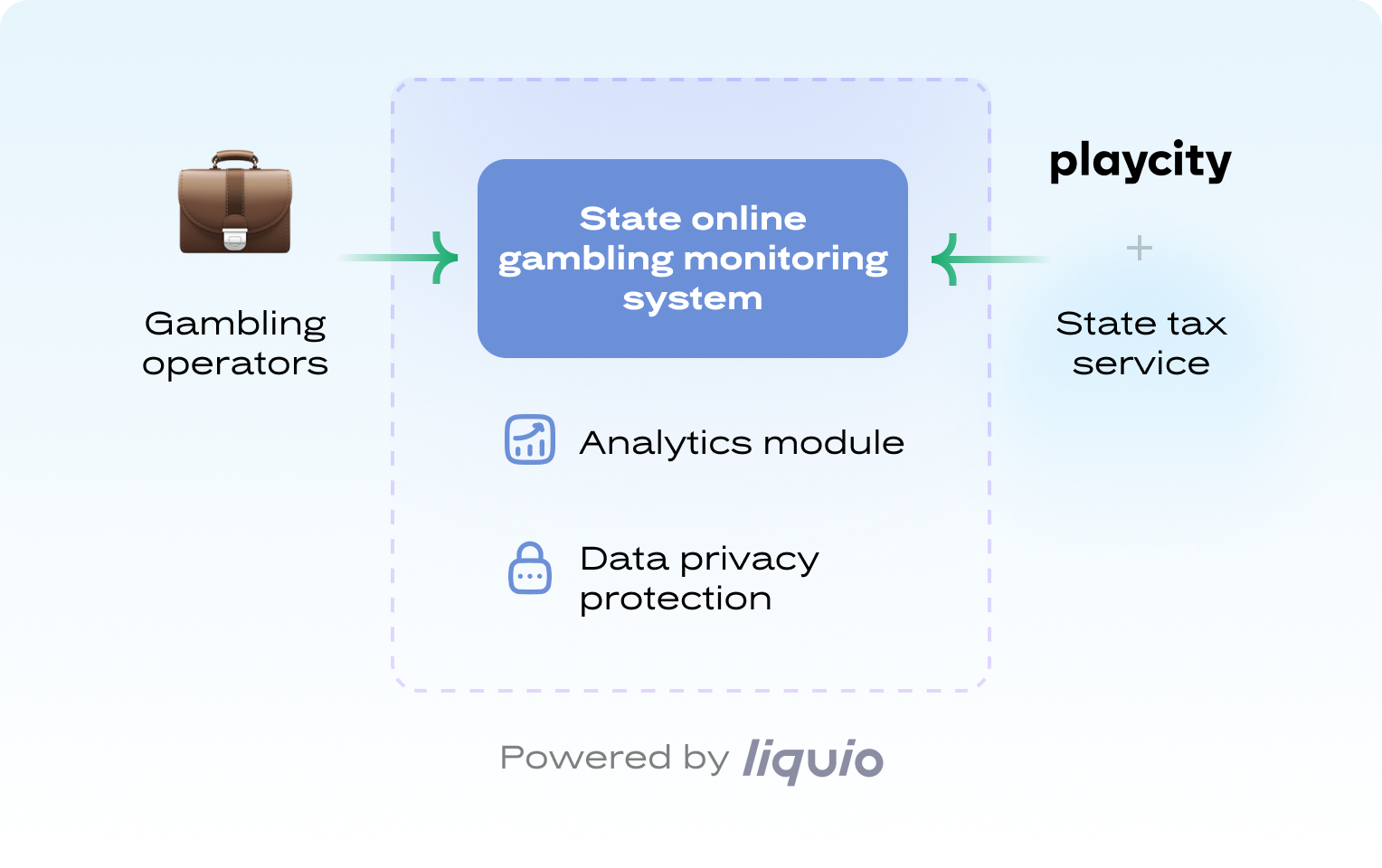
Image: How the online gambling monitoring system works
The online gambling monitoring system was created on the low-code platform Liquio, developed by the IT company Kitsoft. Its architecture made it possible to immediately set the scale at the national level: The online gambling monitoring system is designed to process up to 100,000 operations per second with the possibility of further load growth.
Liquio makes it possible to build systems that work with large volumes of data and process many operations in real time. Importantly, the low-code approach does not limit complex government solutions; on the contrary, it provides speed, flexibility, and the ability to build systems that meet international standards,
says Kitsoft CEO Oleksandr Iefremov.
Liquio is included in the international GovStack catalog and is certified by the State Service of Special Communications with an assurance level of G2, confirming compliance with government information security requirements.
Importantly, Liquio ensures the state’s digital sovereignty. Thanks to its open-source approach, solutions built on this platform can be developed by different teams and adapted to new needs. This guarantees system stability, long-term development, and continued state control over digital services.
The platform underpins a range of digital services, including the Diia portal, as well as the e-Entrepreneur, uResidency, eMalyatko (It's a Baby), and e-Veteran portal, among others.
Electronic workspaces: how the market connects
The Kitsoft team developed electronic workspaces:
- for gambling operators,
- for PlayCity,
- for the State Tax Service of Ukraine.
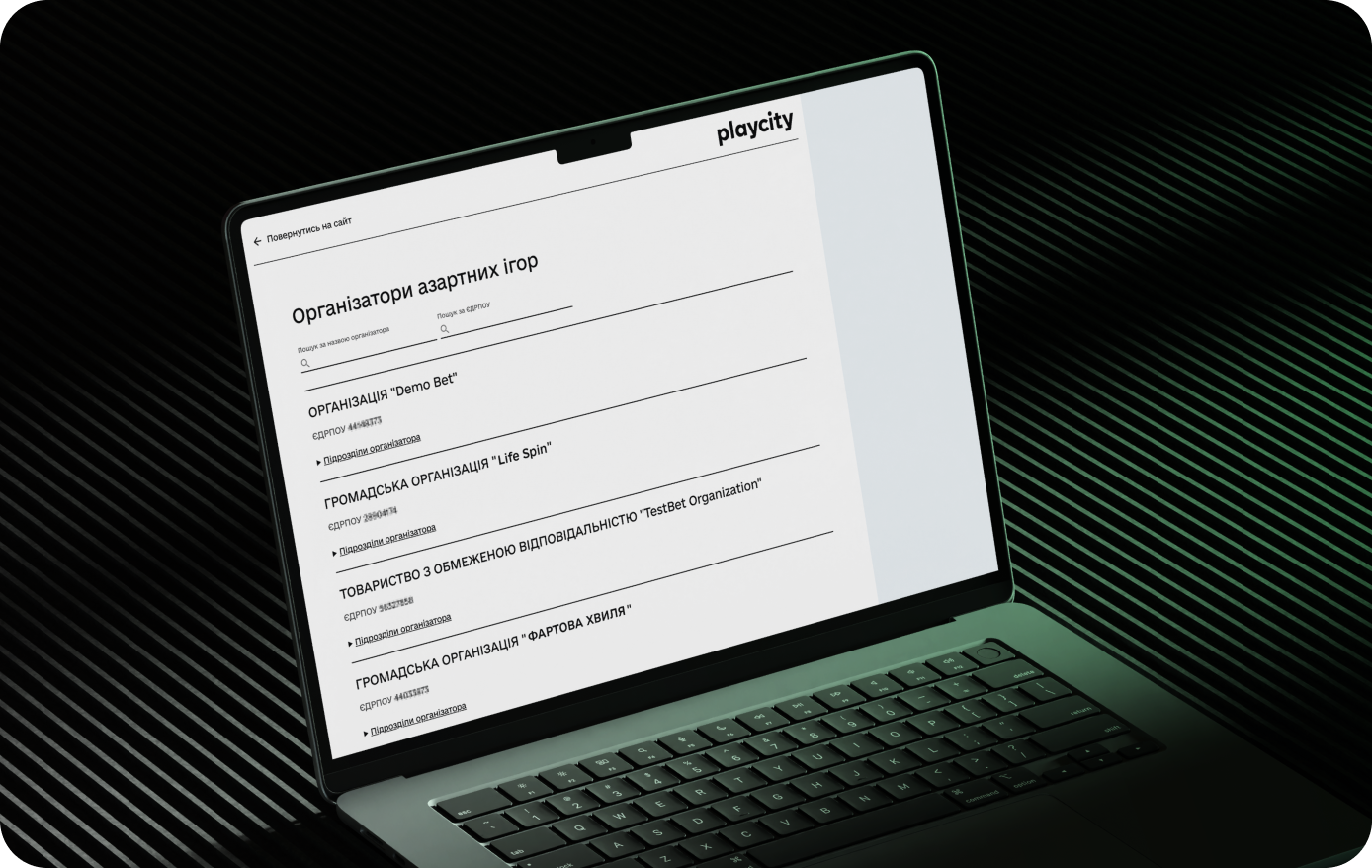
Image: Gambling operator workspaces in thr online gambling monitoring system
Through the gambling operator workspaces, users can:
- register in Online gambling monitoring system;
- view information about their gambling venues, websites, and mobile applications;
- view information about their gambling equipment;
- manage representatives;
- create and deactivate access keys for transmitting transaction data to the online system.
User roles are clearly defined in the system — each user has access only to their own functions. Login to the workspaces is carried out using a qualified electronic signature (QES).
The online gambling monitoring system architecture is designed to support a large number of users. The PlayCity and State Tax Service dashboards support dozens of authorized officials, while on the market side the system supports over 1,000 gambling operator accounts.
What data the system is already ready to process
As part of the first phase, the Kitsoft team implemented processing of core gambling business operations in the online gambling monitoring system:
- acceptance of bets;
- payout of winnings;
- bet refunds;
- balance top-ups and fund withdrawals.
Data transmission is automated via application programming interfaces (APIs). Each transaction is validated and recorded in the system in real time.
A transparent market in numbers
The first phase includes 11 analytical reports grouped into four categories: operational, regulatory, analytical, and financial. They allow government authorities to see:
- volumes of bets and payouts;
- gross revenue of operators;
- player activity by type of gambling;
- the overall operational status of the system.
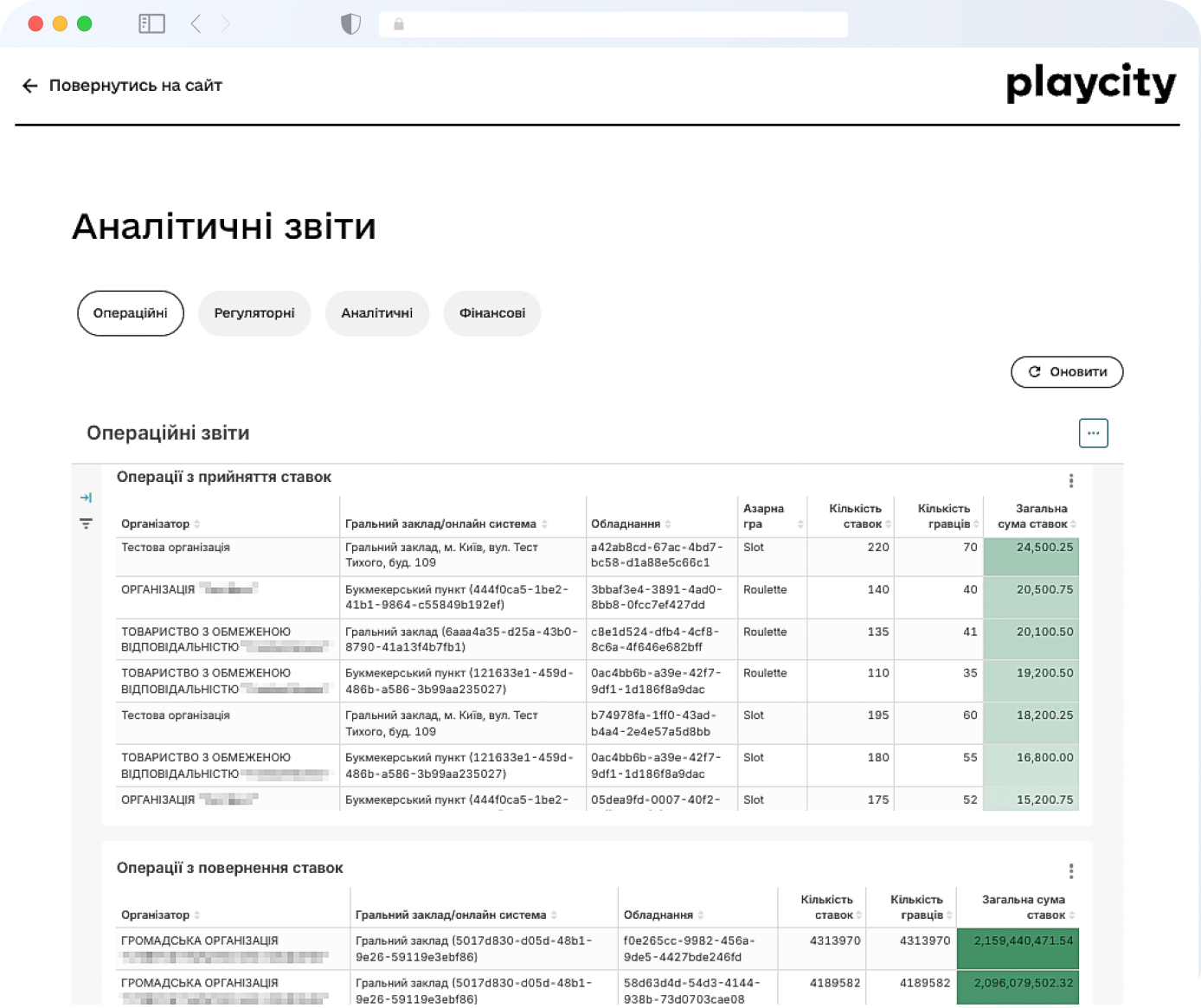
Image: Analytical reports on gambling market operations in the system
Registries: all data in one place
The system includes the “Registries” information and communication system, which covers:
- casinos in gambling venues;
- online casinos;
- bookmaker activities;
- slot machine halls;
- online poker.
The registries contain data on operator licenses, gambling venues, equipment, websites, and mobile applications.
How the team worked
Work on the first phase lasted 2.5 months. A cross-functional Kitsoft team worked on the project, including developers, business analysts, project managers, designers, and cybersecurity specialists.
The Kitsoft and PlayCity teams worked in constant dialogue: holding joint discussions, creating prototypes, modeling regulatory scenarios, and conducting load testing.