Another large-scale digital initiative is emerging in Ukraine — the Obrii labor market ecosystem, being developed by the Ministry of Economy together with the Ministry of Digital Transformation. It will bring together everything a person needs for career development in one place: from job search and reskilling to qualification recognition and access to government support.
Kitsoft joined the project at the stage of preparing its technological foundation: the company designed the solution architecture, deployed infrastructure based on the Liquio low-code platform, transferred the environment to the customer, and trained teams to work with the platform.

GIF: The Obrii digital labor market ecosystem in Diia
Obrii will become part of the Diia ecosystem, with new services available through the portal and mobile application in a convenient digital format. The platform is designed for people who are looking for work, studying, or retraining, as well as for employers. Special attention is given to economically inactive Ukrainians who are currently outside the labor market, including veterans, internally displaced persons, people with disabilities, young people, women with children, and people aged 50+. Dedicated support pathways and access to labor market opportunities are planned for these groups.
By the end of June, Obrii plans to launch beta testing of its first two services — a professional development grant and remote termination of employment in temporarily occupied territories. After testing is completed, these services will become available to users through Diia.
The rollout of the ecosystem will continue throughout 2026–2027. The next stages will include the launch of a registry of working-age individuals, electronic employment functionality, AI-powered job and training matching, as well as proactive support services for people who currently remain outside the labor market. Among the nearest planned services are unemployment registration and unemployment benefit assignment.
From Diia to Obrii: a shared technological foundation
The Kitsoft team deployed two environments at the facilities of the State Employment Center — a production environment and a testing environment. Company specialists configured the infrastructure and system settings and transferred full control of the environments to the customer for further operation and development.
Kitsoft also provided training for specialists working on Obrii. The program involved 10 representatives of project teams and contractor organizations. The training course lasted 128 hours and covered platform operation, business process creation and configuration, administration, and practical use of Liquio tools.
For us, it is important not only to deliver a platform but also to help the customer’s team become independent in its further development. That is why we train teams to work with Liquio, conduct certification, and help build their own expertise. Today, eight independent IT teams are already working with the platform and creating digital services without Kitsoft’s involvement,
said Oleksandr Iefremov.
An open platform for government digital projects
The technological foundation of Obrii is the open-source Liquio platform, created by the Kitsoft team for launching and developing government digital services. The platform’s open-source code provides customers with full access to the codebase, the ability to independently develop solutions, and the flexibility to engage different contractors.
Liquio powers the Diia portal, It's a baby (eMaliatko), eEntrepreneur, and uResidency services, the Ecosystem platform, eVeteran, and other digital products used daily by millions of Ukrainians.
The platform architecture is designed so that individual services can evolve independently while the overall system remains stable even under high load. This makes it possible to quickly launch new digital services, scale them according to user needs, and promptly adapt them to legislative changes,
commented Andrii Horishniakov, Project Manager at Kitsoft.
Liquio also includes built-in artificial intelligence tools for developing digital services and creating AI assistants. The platform is included in the GovStack international catalogue as a recommended technology for building government digital services. Particular attention has been paid to security: the platform has received a certificate from the State Service of Special Communications and Information Protection of Ukraine with a G2 assurance level, confirming compliance with government information security requirements.
A new wave of GovTech solutions
Today, Ukraine is moving from the digitalization of individual services toward the creation of sectoral ecosystems that bring together services, data, and processes around user needs.
Obrii is one example of this approach. Its goal is not simply to add new services, but to create a unified digital space for interaction among citizens, employers, educational institutions, and government agencies in the field of employment.
If the first wave of digitalization in Ukraine was primarily associated with Diia, a new stage is now emerging — sectoral digital systems that help transform entire sectors. Obrii and similar projects are examples of this trend, which will only continue to strengthen in the coming years,
noted Oleksandr Iefremov, CEO of Kitsoft.
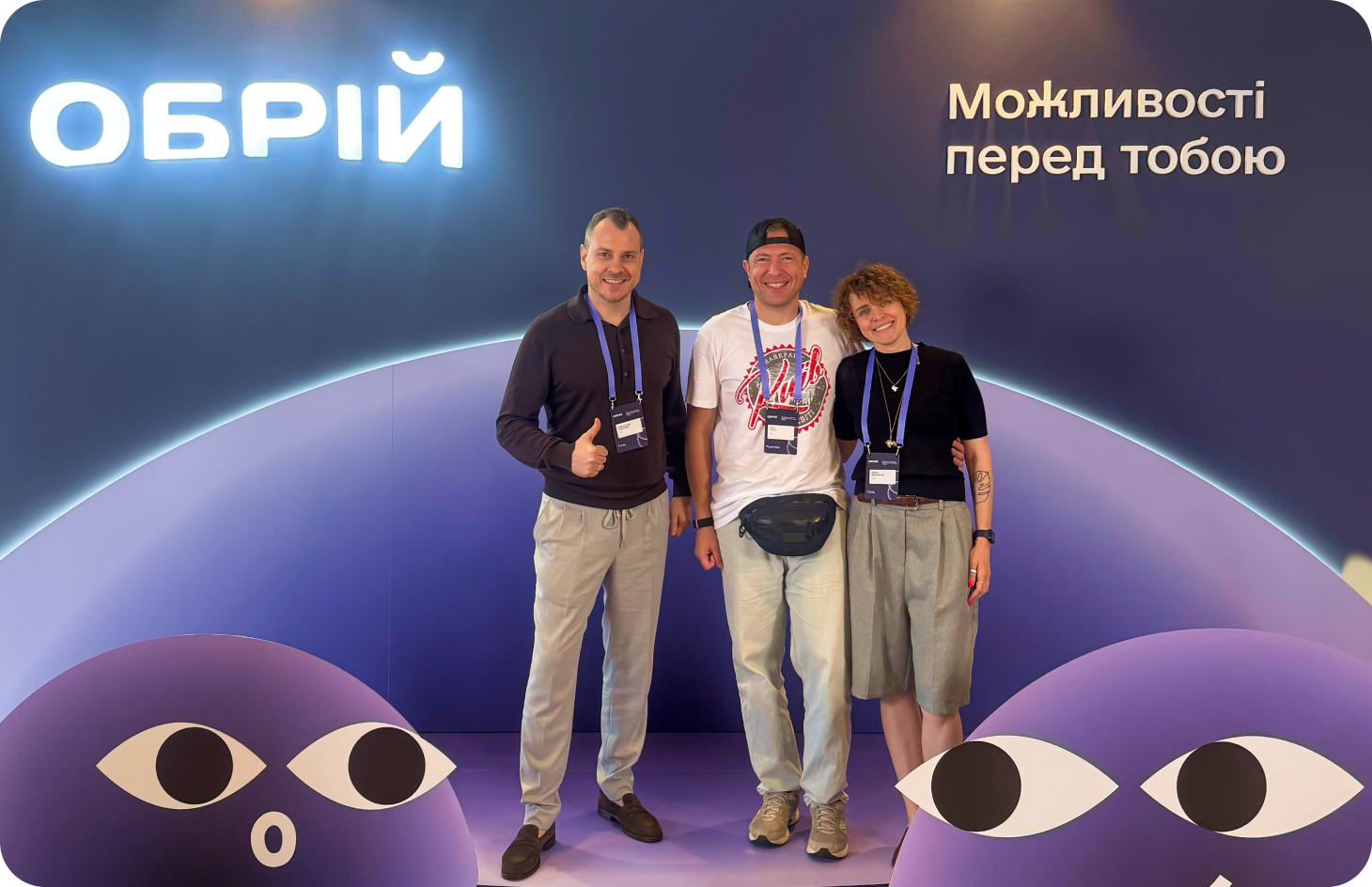
Image: The Kitsoft team at the Obrii presentation
For Kitsoft, participation in the project became another step in developing technologies that help government institutions launch digital services faster, build internal expertise, and create modern digital products for citizens.