On November 5–6, 2026, Kitsoft CEO Oleksandr Iefremov and COO Mariia Muzyka took part in Tallinn Digital Summit 2026. At the summit, Kitsoft shared how Ukraine keeps launching new public services during the war, and how AI helps build them faster.
Tallinn Digital Summit is a yearly international forum on digital government, hosted by the Prime Minister of Estonia.
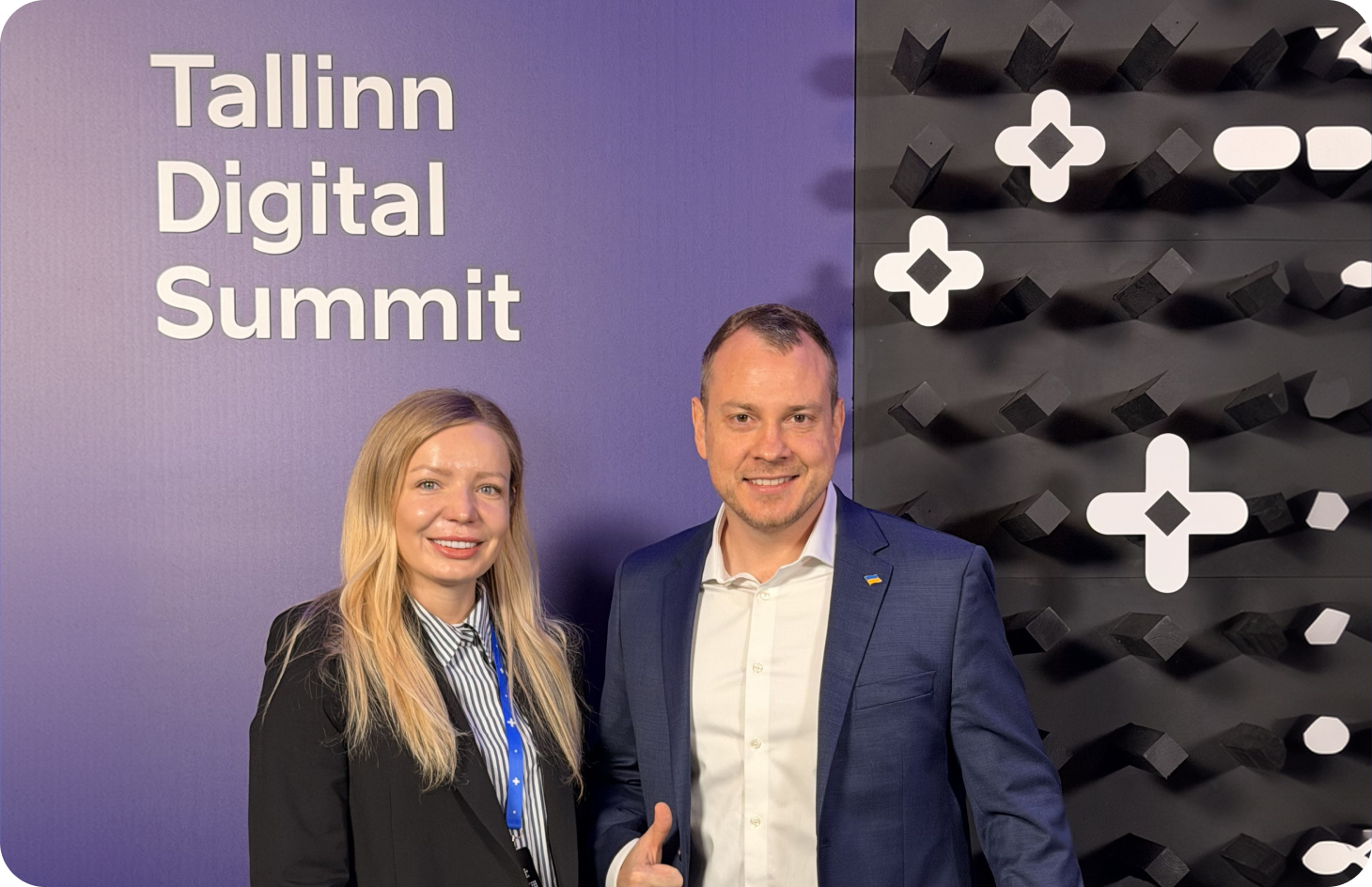
Image: Kitsoft COO Maria Muzyka and CEO Oleksandr Iefremov at Tallinn Digital Summit 2026
November 4 — Side event “Digital Resilience and Sovereignty: Lessons from Ukraine, Perspectives from Estonia and the EU”
The day before the summit, Oleksandr Iefremov and Mariia Muzyka attended a side event. There, Oleksandr explained how Ukraine keeps developing digital public services during Russia’s full-scale invasion.
In 2020, Diia, Ukraine’s national digital government platform, launched with 27 services. Today, it offers more than 200 digital services and has more than 24 million users. Many of these services launched after the full-scale invasion began, in response to people’s new needs.
The technology and teams we built before the full-scale invasion let Ukraine continue its digital transformation. Government databases were already connected, experienced teams were in place, and the technology was ready. This helped us quickly adapt services to people’s new needs
— Oleksandr Iefremov, CEO of Kitsoft.
Oleksandr presented Kitsoft’s Digital Service Assembly Line, a step-by-step method for creating government services. It covers the whole process: understanding what people need, simplifying paperwork, then building, testing, and launching the service.
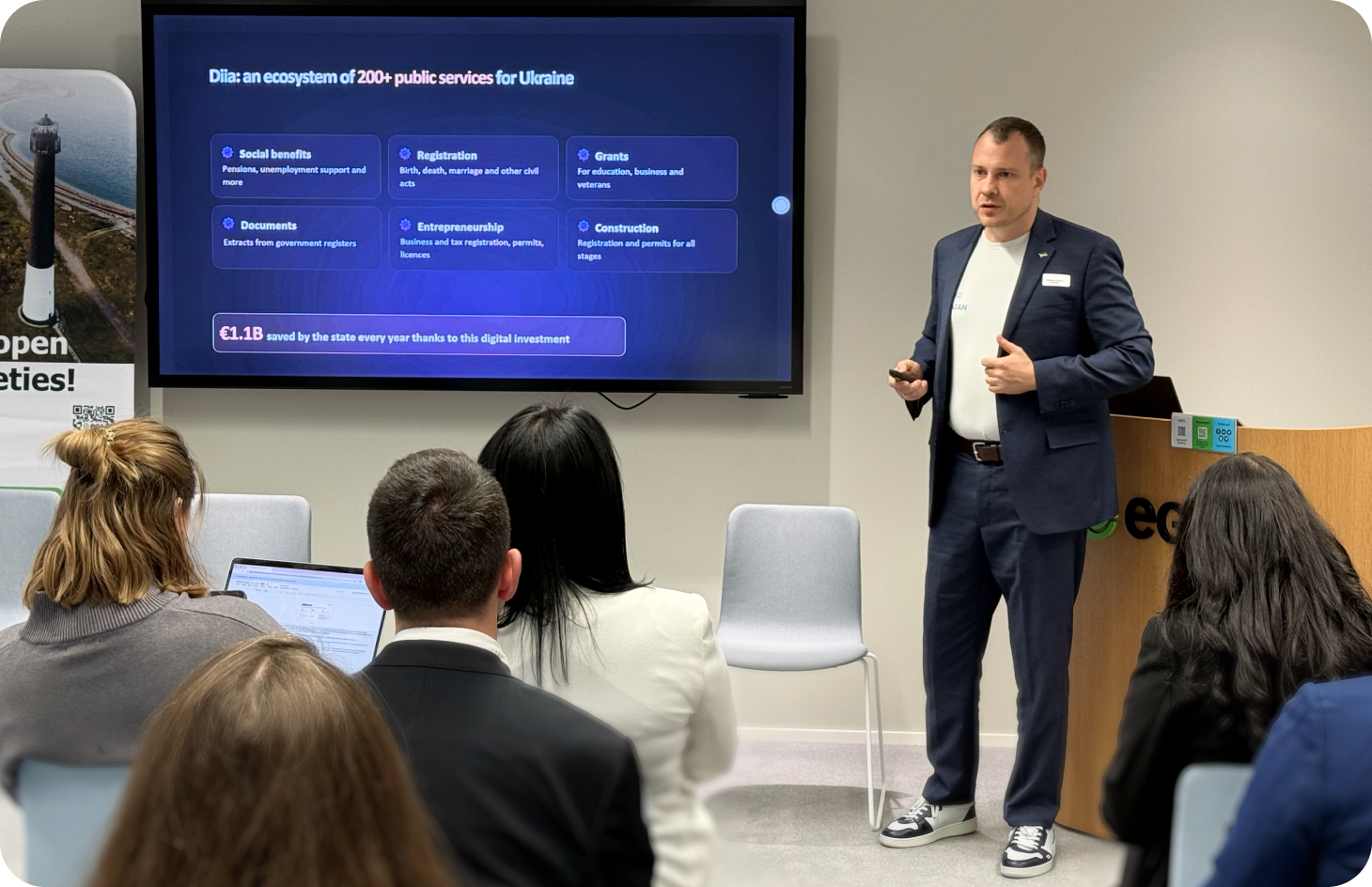
Image: Oleksandr Iefremov speaking in Tallinn
This method runs on Liquio, Kitsoft’s platform for building public services. Liquio uses AI and low-code, which means services are built from ready-made blocks instead of being written from scratch each time. More than 200 Diia services are built on Liquio.
This makes the work much faster. A government service usually takes 6–12 months to build. With Liquio, a new service launches in 1–1.5 months. For people, this means the services they need arrive much sooner.
Oleksandr also joined a panel discussion titled “From Resilience to Digital Sovereignty.” Other speakers came from ITL Estonia, Estonia’s tech industry association, and from two departments of the European Commission: DG CONNECT, which leads EU digital policy, and DG ENEST, which handles EU enlargement and relations with Eastern neighbors.
November 5–6 — Tallinn Digital Summit
This year’s theme was “How to Thrive in the Agentic Era? Competitiveness. Security. Efficiency.” The agentic era means a time when AI agents don’t just answer questions but complete tasks on their own.
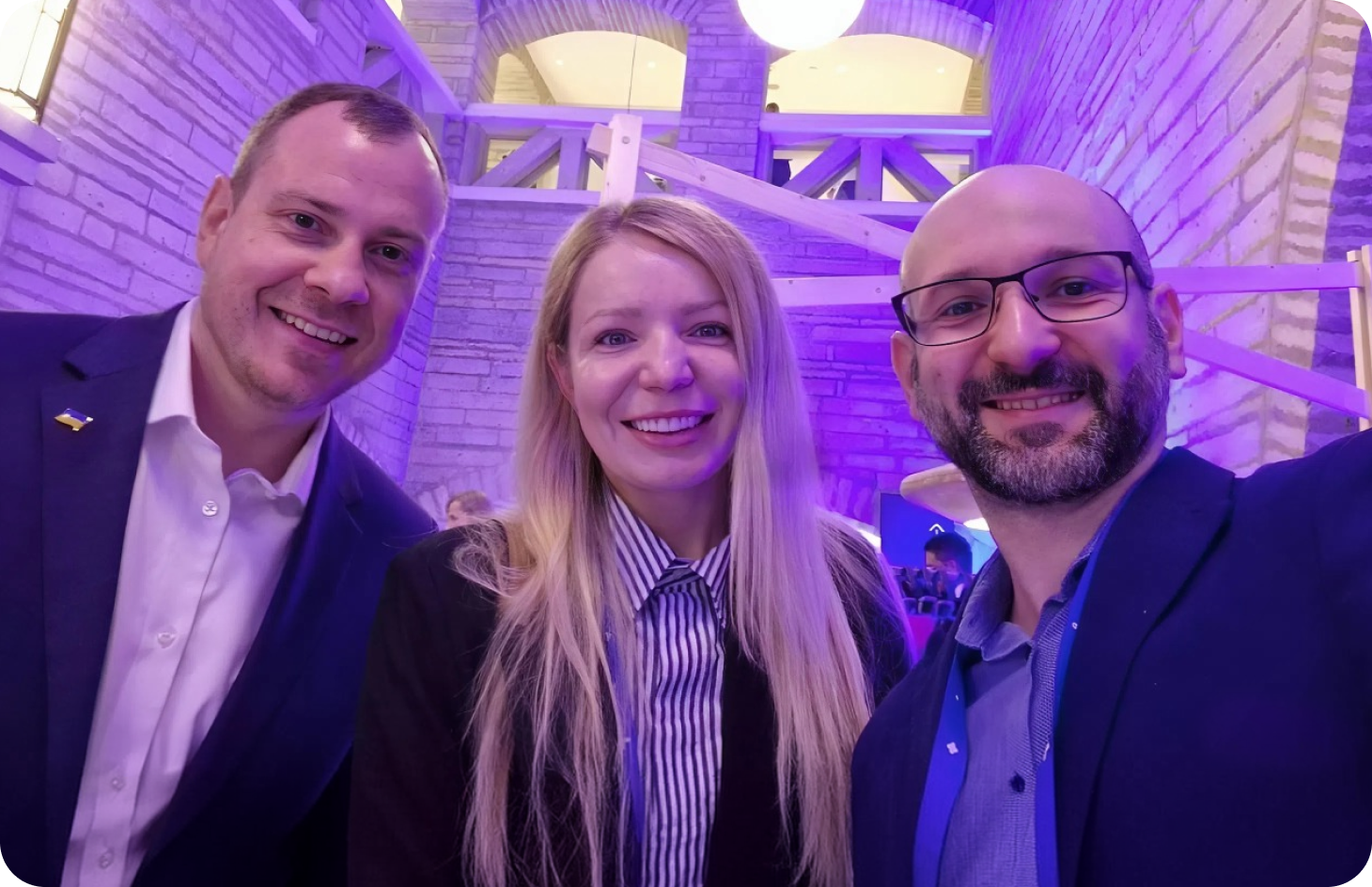
Image: Tallinn Digital Summit 2026
The summit brought together government officials, digital transformation leaders, GovTech companies, and international tech partners. They discussed how to move from AI pilot projects to solutions that actually work. According to summit materials, fewer than 5% of organizations worldwide have seen real financial returns from AI.
Ukraine already has hands-on experience with this shift. In September 2025, Diia launched Diia.AI, an AI assistant for public services. Kitsoft built its technical foundation. The assistant doesn’t just answer questions — it can also provide services right in the chat.
We thank the organizers of Tallinn Digital Summit 2026: the International Centre for Defence and Security, an Estonian think tank, and the Government of Estonia. Special thanks go to the organizers of the side event: ITL Estonia, GovTech Alliance of Ukraine (an association of Ukrainian GovTech companies), and the Ministry of Foreign Affairs of Estonia. We also thank our partners at the European Commission: DG INTPA, the department for international partnerships, as well as DG ENEST and DG CONNECT.